
Between 2020-2021
+50%
of psychiatric emergencies in teenagers


An anxiety management app for teenagers. An end-to-end project that covers all phases of the design process.
Duration 2022
Case study
Product design
UX/UI Design
CONTEXT
La Nave Nodriza presented us with a challenge within the framework of the SDGs (Sustainable Development Goals of the UN).
Between 2020-2021
of psychiatric emergencies in teenagers


of young people aged 11-17 suffer from anxiety.

Only
of young people with anxiety seek treatment.
From this point, I began to research.
The pandemic has broken down taboos and stigmas surrounding mental health and has made it even clearer that there is no health without mental health. In the last 2 years, Generation Z has uncovered the discomfort of humanity regarding mental health.
Why is childhood a critical stage for mental health?
A significant portion of mental disorders begins in adolescence (specifically anxiety disorders) and manifests at different times during childhood and adolescence.
According to Infocop:
These disorders often go unnoticed.
Only 1% of young people with anxiety seek treatment.
The first step to help young people is to correctly identify the symptoms of anxiety. This is often confused with other disorders, resulting in ineffective treatment.
Mindfulness meditation is increasingly being introduced in a wide variety of contexts (school, clinical mental health) to help young people manage stress, emotionality, and problematic behaviors.


Research on the impact of the pandemic on adolescent mental health. Interviews with users and Dr. Salvador Ruiz (psychiatrist).


Detection vs. prevention. Focus on identifying symptoms and crisis management. Problem defined with data and real testimonies.


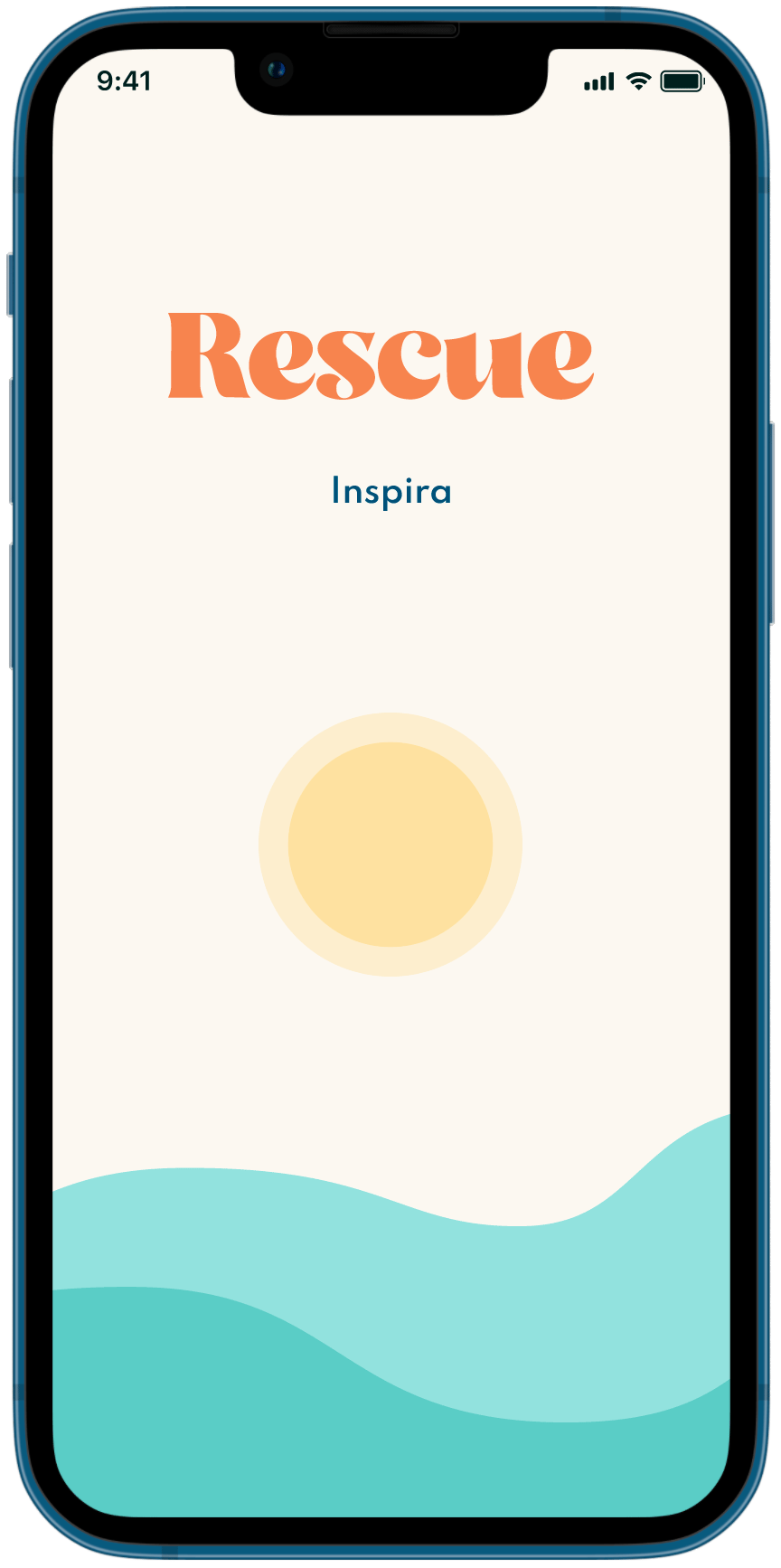
Concept of the "digital lifebuoy". Naming Rescue linked to the metaphor of the sea and the feeling of drowning. Visual identity based on states of water.


Information architecture, diagnostic flows, 5 main functionalities, microcopy adapted for teenagers. Prototype in Figma.


Next steps identified: testing with real teenagers, iteration of expressions, expansion of Plutchik's emotions, integration with experts.
Solution
As a result of the research, taking into account the gaps in emotional management within the educational framework and considering the presence of mobile devices among teenagers, I designed Rescue.
A digital tool aimed at teenagers to help them identify and manage their anxiety. The app aims to be a safe space and a tool for teenagers to understand what is happening to them, help them manage their emotions, provide support during an anxiety attack with the necessary content at their fingertips, shed light on problems, and offer resources to solve them or seek help if needed. Rescue has five functionalities, each focused on addressing a different front.
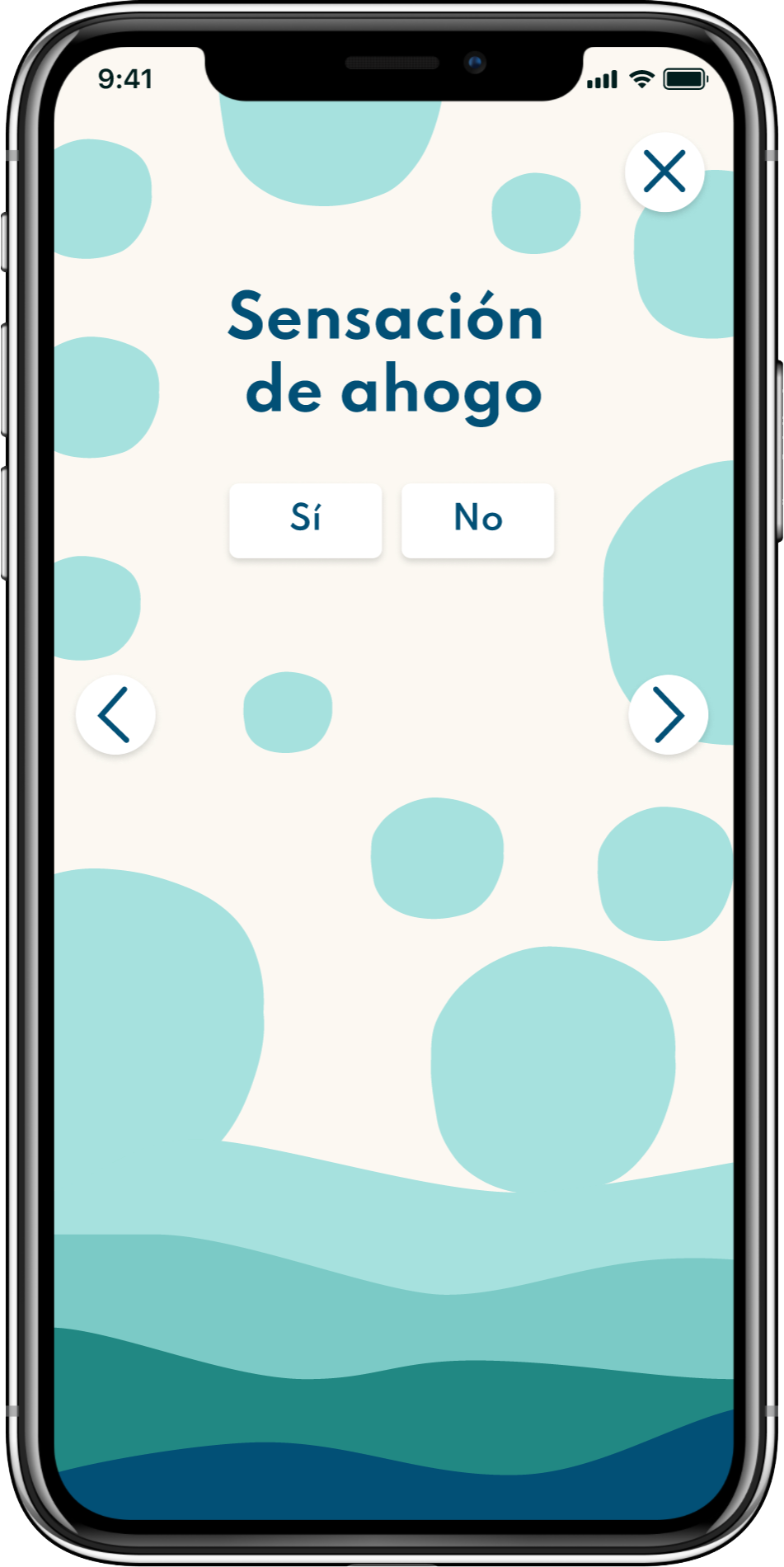
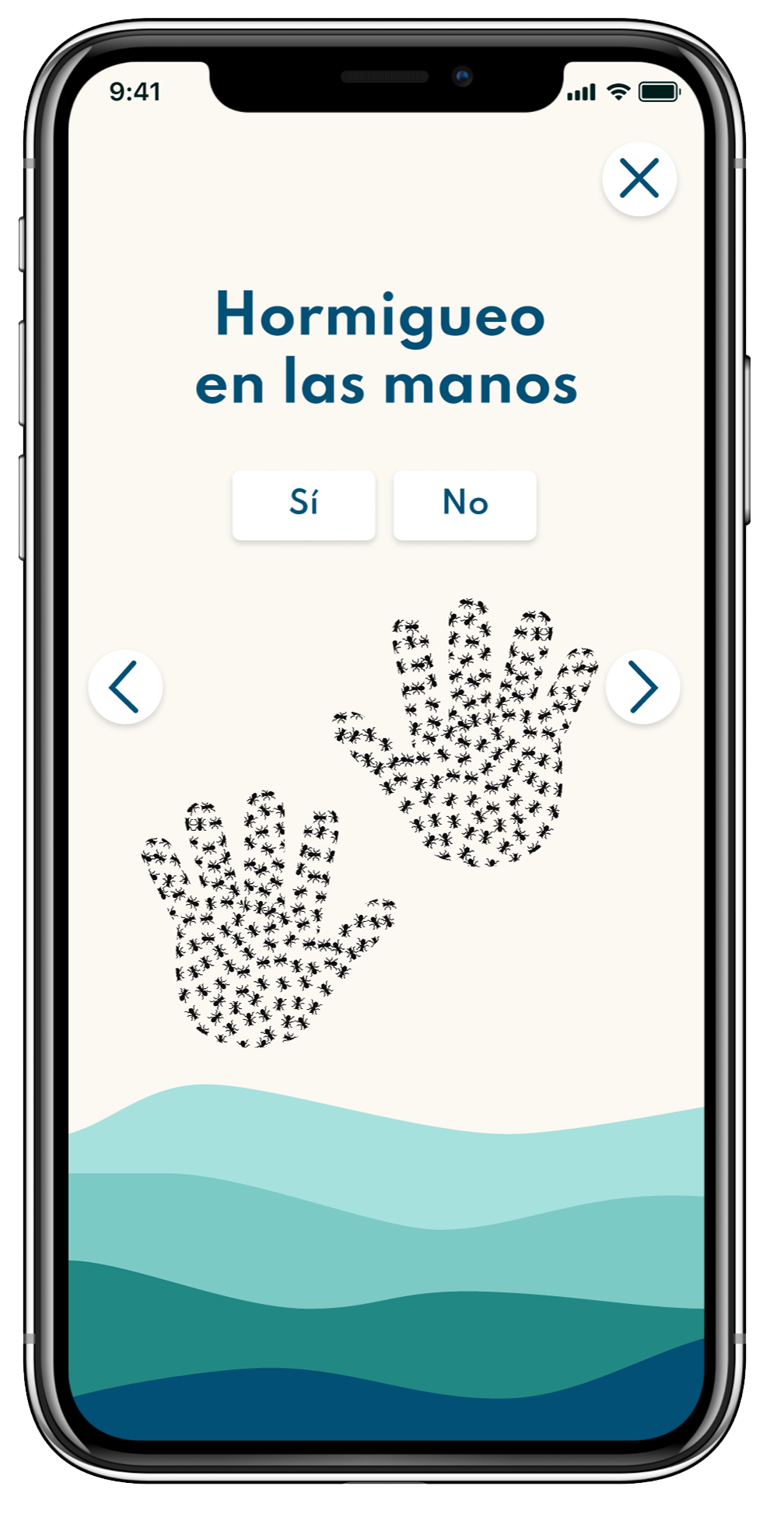
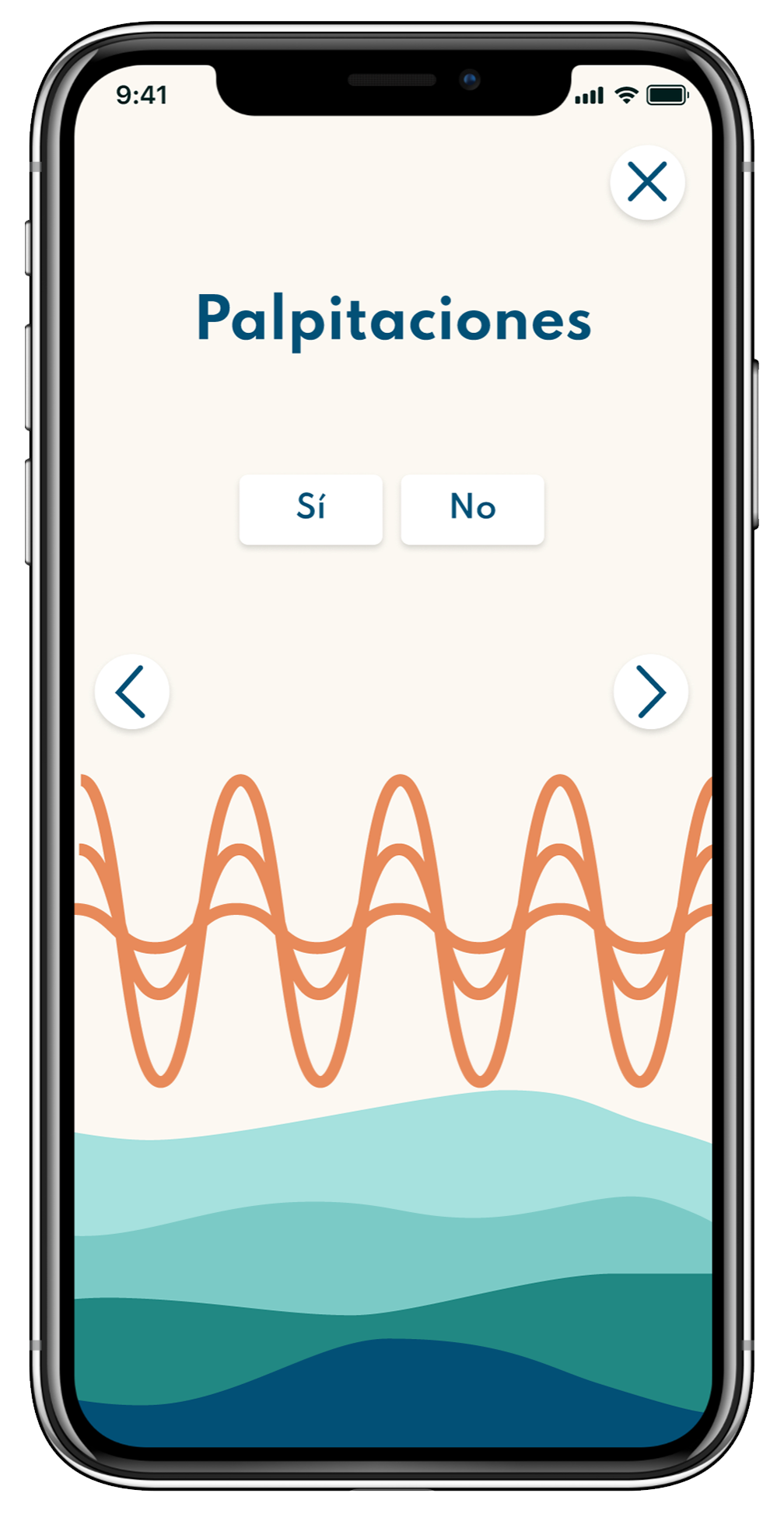
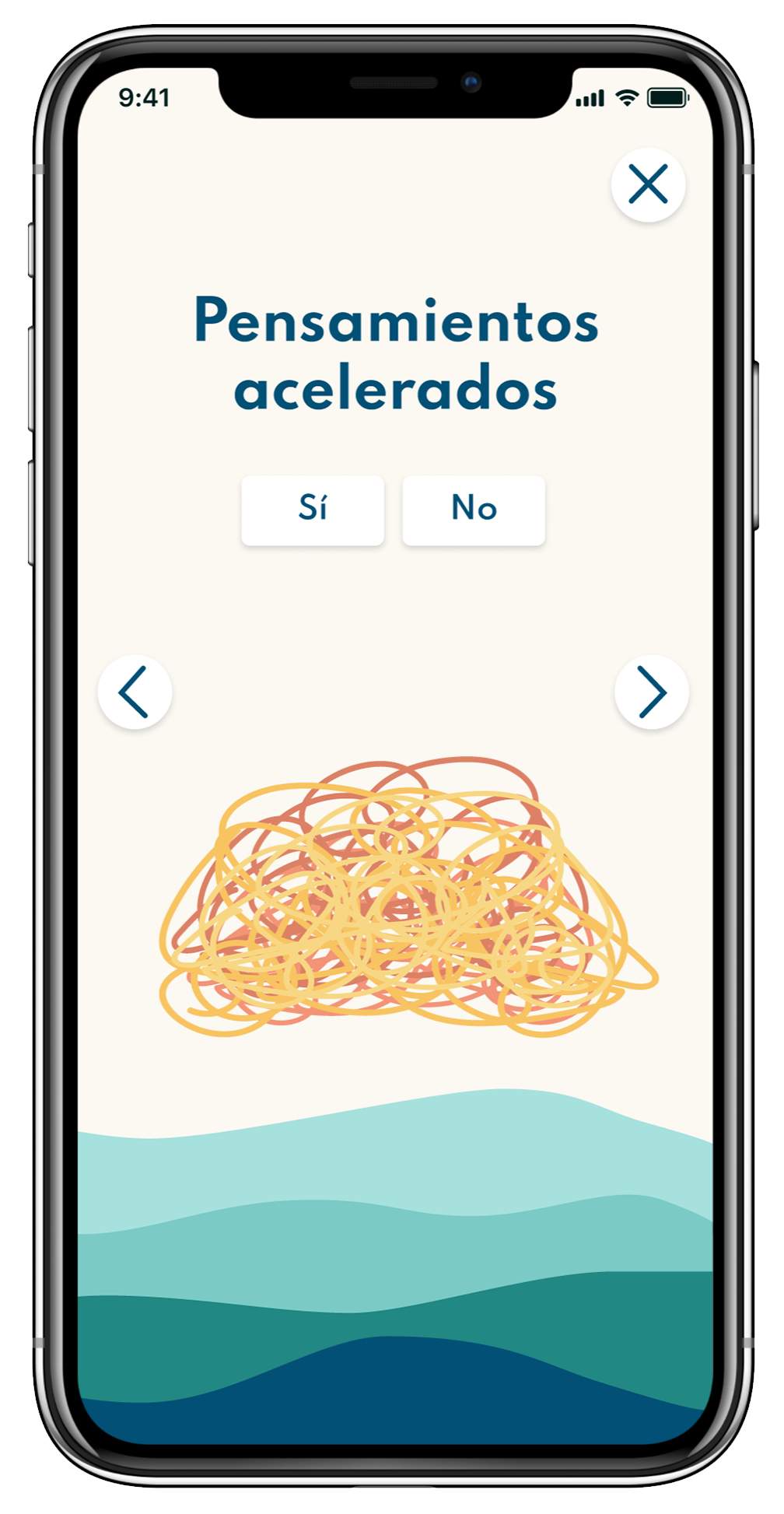
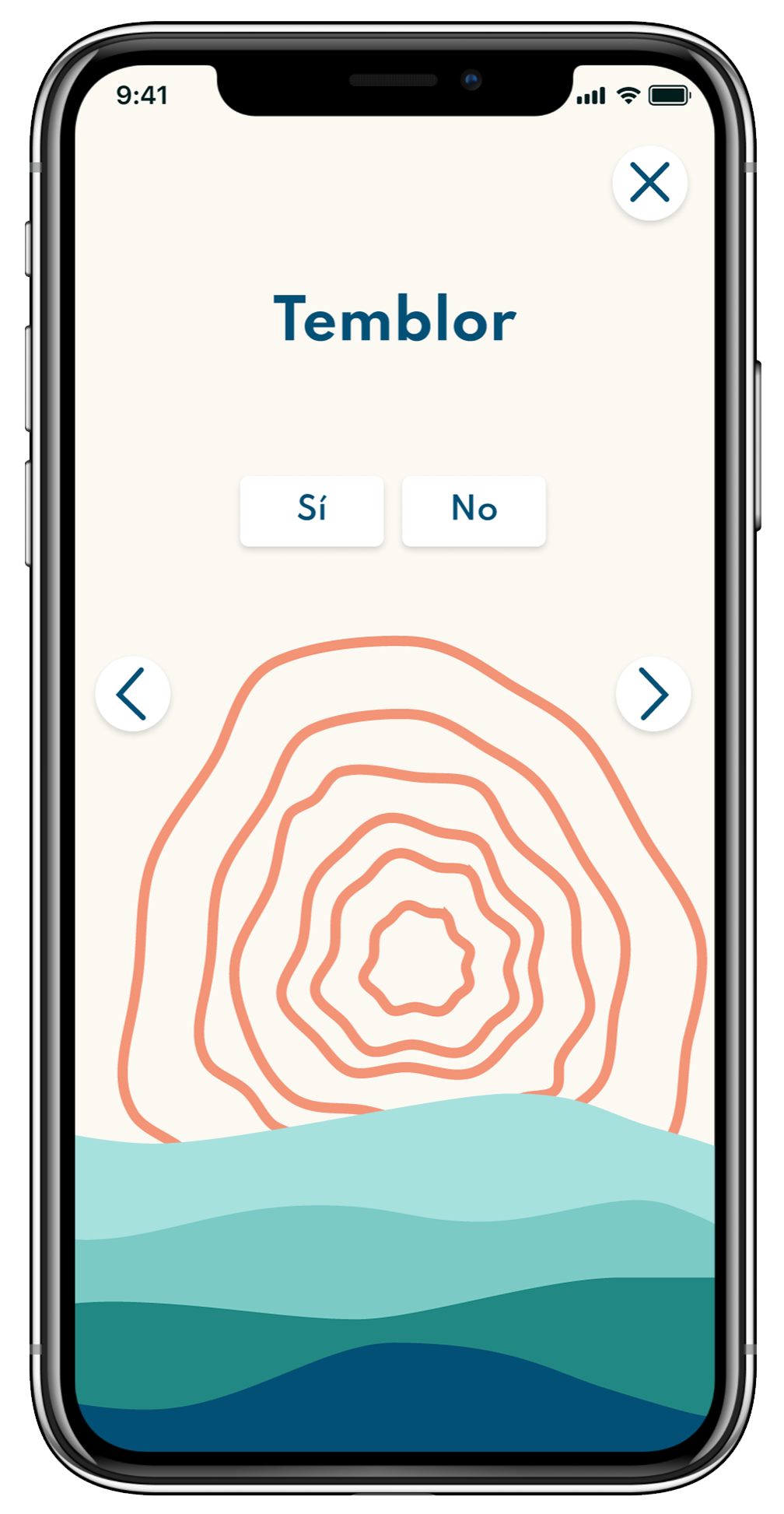
5 questions about symptoms. Conditional logic that responds with exercises based on the detected level of anxiety.
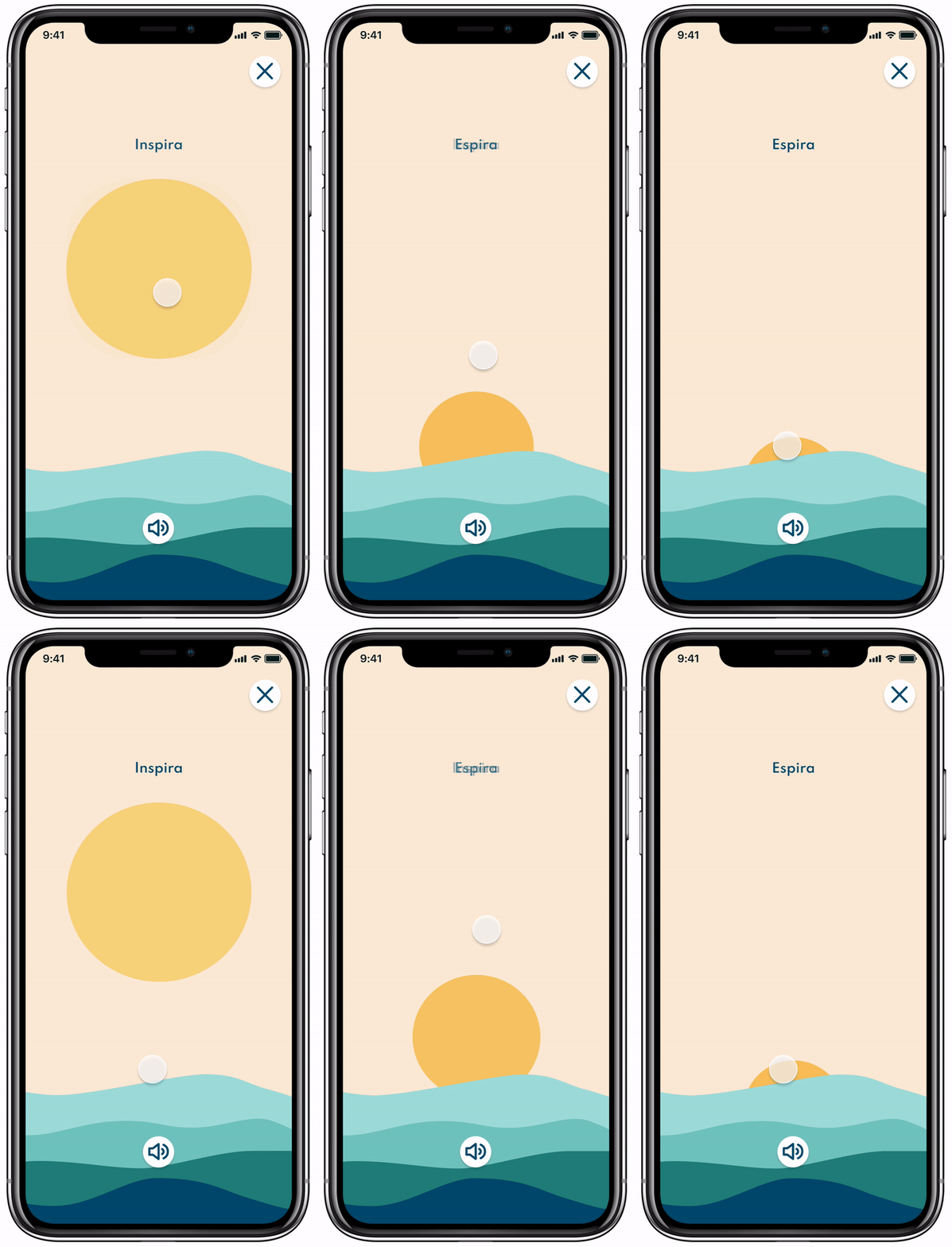
Validated diaphragmatic breathing with a psychiatrist. Accessible via vibration, audio, or image. Lifebuoy button always visible.
Plutchik's wheel of emotions (6 states). Recording peaks, themes by context. Calendar with smart alerts.
Multiformat library: podcasts, books, comics. Curation aimed at adolescent language.
Three key moments where the app connects the user with a specialist from the ANAR Foundation or the school counselor. The app does not replace the professional: it complements it.
Diagnosis
Upon entering the app, it will ask the user how they feel; if they are unsure, it will help them identify whether what they are experiencing is anxiety... through 5 self-diagnosis steps... If the result is positive (3 or more symptoms), the app will guide them through a breathing exercise.
Exercises
Rescue will offer a guided breathing exercise to help them calm down.
Rescue will provide up to 3 different types of exercises. If after completing the exercise the user still feels unwell, Rescue will offer the option to speak with a specialist from the ANAR Foundation.
Lifebuoy button
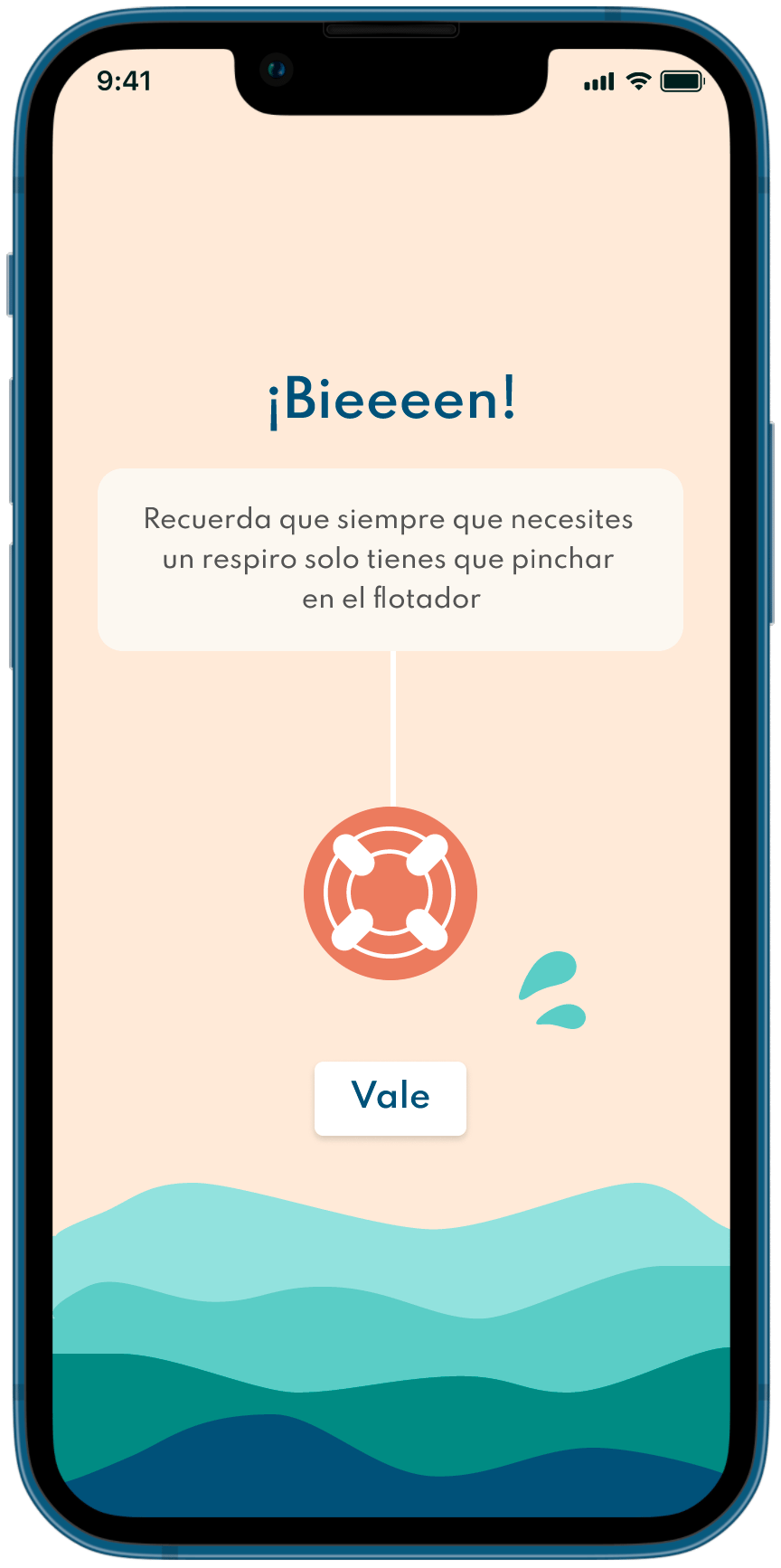
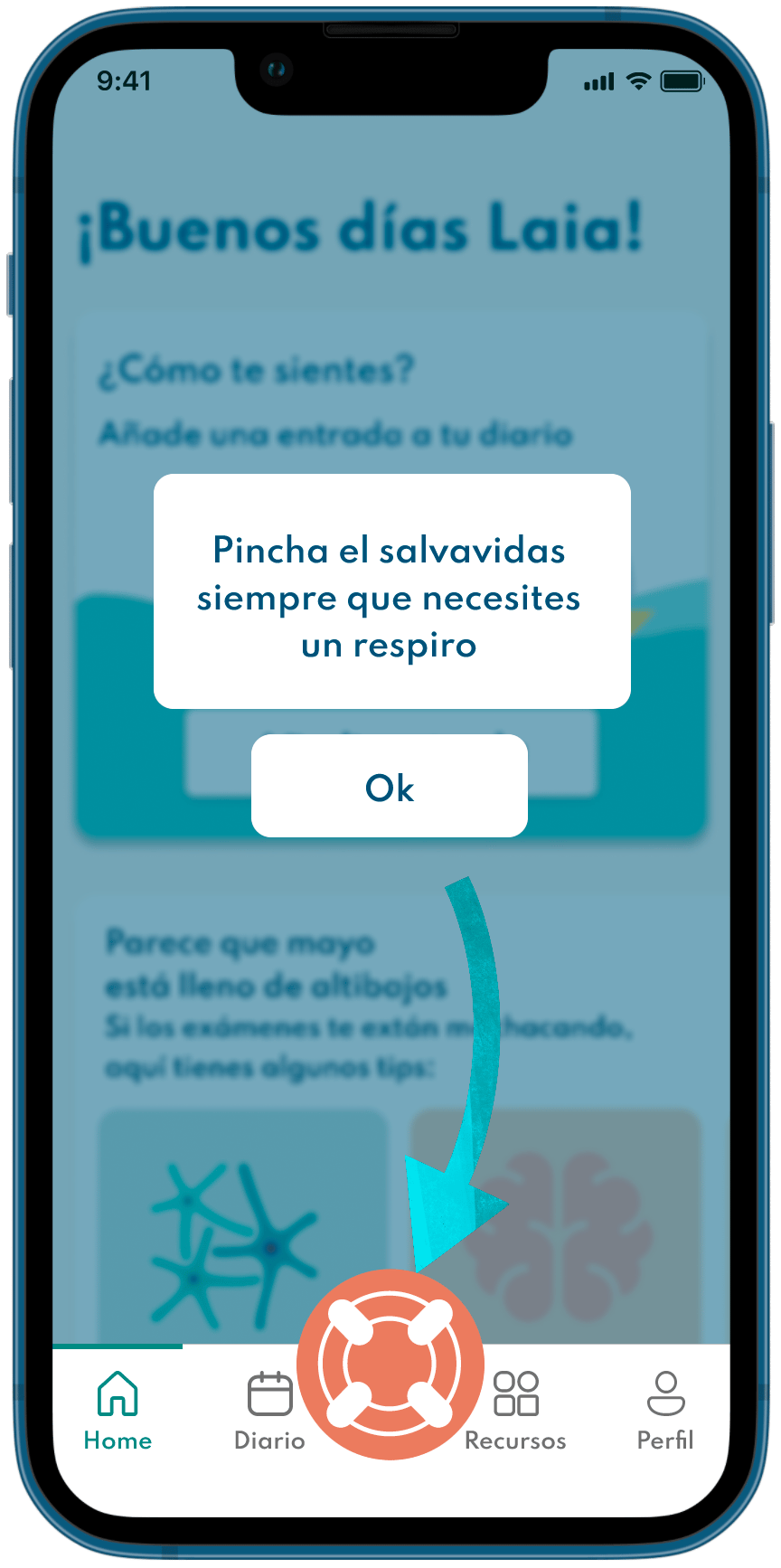
And at the end, it will remind them that within the app, the lifebuoy button will always be present.
A quick shortcut for the user to return to this flow in a crisis situation.
Tracking and diary
Once on the main screen, the user has the functionality to track their mood.
If something has happened that day that needs to be recorded, they can select a topic, write what occurred, what emotion they felt about it, and their level of anxiety.
These entries will be recorded in their diary where they can filter them by topic; they will also have the option to share them if needed with their school counselor or therapist as supporting material.

El look&feel de la app tiene como base el mar, que como nosotros puede tener varios estados, un día puede estar agitado otro día puede estar en calma. Esta analogía con los estados del agua y del mar pretende ayudar a explicar mejor a los usuarios ciertos conceptos y emociones.
Investigación secundaria y primara, fueron claves durante el proceso del diseño de la app. De este research extraje datos importantes que me ayudaron a tomar decisiones de diseño claves. Entrevistas con especialistas, un psiquiatra, un profesor, pacientes con ansiedad.


An anxiety management app for teenagers. An end-to-end project that covers all phases of the design process.
Case study
Product design
UX/UI Design
Duration 2022
CONTEXT
La Nave Nodriza presented us with a challenge within the framework of the SDGs (Sustainable Development Goals of the UN).
Between 2020-2021
of psychiatric emergencies in teenagers
of young people aged 11-17 suffer from anxiety.
Only
of young people with anxiety seek treatment.
From this point, I began to research.
The pandemic has broken down taboos and stigmas surrounding mental health and has made it even clearer that there is no health without mental health. In the last 2 years, Generation Z has uncovered the discomfort of humanity regarding mental health.
Why is childhood a critical stage for mental health?
A significant portion of mental disorders begins in adolescence (specifically anxiety disorders) and manifests at different times during childhood and adolescence.
According to Infocop:
These disorders often go unnoticed.
Only 1% of young people with anxiety seek treatment.
The first step to help young people is to correctly identify the symptoms of anxiety. This is often confused with other disorders, resulting in ineffective treatment.
Mindfulness meditation is increasingly being introduced in a wide variety of contexts (school, clinical mental health) to help young people manage stress, emotionality, and problematic behaviors.

Research on the impact of the pandemic on adolescent mental health. Interviews with users and Dr. Salvador Ruiz (psychiatrist).
Detection vs. prevention. Focus on identifying symptoms and crisis management. Problem defined with data and real testimonies.
Concept of the "digital lifebuoy". Naming Rescue linked to the metaphor of the sea and the feeling of drowning. Visual identity based on states of water.
Information architecture, diagnostic flows, 5 main functionalities, microcopy adapted for teenagers. Prototype in Figma.
Next steps identified: testing with real teenagers, iteration of expressions, expansion of Plutchik's emotions, integration with experts.
Solution
As a result of the research, taking into account the gaps in emotional management within the educational framework and considering the presence of mobile devices among teenagers, I designed Rescue.
A digital tool aimed at teenagers to help them identify and manage their anxiety. The app aims to be a safe space and a tool for teenagers to understand what is happening to them, help them manage their emotions, provide support during an anxiety attack with the necessary content at their fingertips, shed light on problems, and offer resources to solve them or seek help if needed. Rescue has five functionalities, each focused on addressing a different front.
5 questions about symptoms. Conditional logic that responds with exercises based on the detected level of anxiety.
Validated diaphragmatic breathing with a psychiatrist. Accessible via vibration, audio, or image. Lifebuoy button always visible.
Plutchik's wheel of emotions (6 states). Recording peaks, themes by context. Calendar with smart alerts.
Multiformat library: podcasts, books, comics. Curation aimed at adolescent language.
Three key moments where the app connects the user with a specialist from the ANAR Foundation or the school counselor. The app does not replace the professional: it complements it.
Diagnosis
Upon entering the app, it will ask the user how they feel; if they are unsure, it will help them identify whether what they are experiencing is anxiety... through 5 self-diagnosis steps... If the result is positive (3 or more symptoms), the app will guide them through a breathing exercise.
Exercises
Rescue will offer a guided breathing exercise to help them calm down.
Rescue will provide up to 3 different types of exercises. If after completing the exercise the user still feels unwell, Rescue will offer the option to speak with a specialist from the ANAR Foundation.
Tracking and diary
Once on the main screen, the user has the functionality to track their mood.
If something has happened that day that needs to be recorded, they can select a topic, write what occurred, what emotion they felt about it, and their level of anxiety.
These entries will be recorded in their diary where they can filter them by topic; they will also have the option to share them if needed with their school counselor or therapist as supporting material.
Panic button
And at the end, it will remind them that within the app, the lifebuoy button will always be present.
A quick shortcut for the user to return to this flow in a crisis situation.
El look&feel de la app tiene como base el mar, que como nosotros puede tener varios estados, un día puede estar agitado otro día puede estar en calma. Esta analogía con los estados del agua y del mar pretende ayudar a explicar mejor a los usuarios ciertos conceptos y emociones.
Investigación secundaria y primara, fueron claves durante el proceso del diseño de la app. De este research extraje datos importantes que me ayudaron a tomar decisiones de diseño claves. Entrevistas con especialistas, un psiquiatra, un profesor, pacientes con ansiedad.


An anxiety management app for teenagers. An end-to-end project that covers all phases of the design process.
Case study
Product design
UX/UI Design
Duration 2022
CONTEXT
La Nave Nodriza presented us with a challenge within the framework of the SDGs (Sustainable Development Goals of the UN).

Between 2020-2021
of psychiatric emergencies in teenagers
of young people aged 11-17 suffer from anxiety.
Only
of young people with anxiety seek treatment.
From this point, I began to research.
The pandemic has broken down taboos and stigmas surrounding mental health and has made it even clearer that there is no health without mental health. In the last 2 years, Generation Z has uncovered the discomfort of humanity regarding mental health.
Why is childhood a critical stage for mental health?
A significant portion of mental disorders begins in adolescence (specifically anxiety disorders) and manifests at different times during childhood and adolescence.
According to Infocop:
These disorders often go unnoticed.
Only 1% of young people with anxiety seek treatment.
The first step to help young people is to correctly identify the symptoms of anxiety. This is often confused with other disorders, resulting in ineffective treatment.
Mindfulness meditation is increasingly being introduced in a wide variety of contexts (school, clinical mental health) to help young people manage stress, emotionality, and problematic behaviors.
Research on the impact of the pandemic on adolescent mental health. Interviews with users and Dr. Salvador Ruiz (psychiatrist).
Detection vs. prevention. Focus on identifying symptoms and crisis management. Problem defined with data and real testimonies.


Concept of the "digital lifebuoy". Naming Rescue linked to the metaphor of the sea and the feeling of drowning. Visual identity based on states of water.

Information architecture, diagnostic flows, 5 main functionalities, microcopy adapted for teenagers. Prototype in Figma.
Next steps identified: testing with real teenagers, iteration of expressions, expansion of Plutchik's emotions, integration with experts.
Solution
As a result of the research, taking into account the gaps in emotional management within the educational framework and considering the presence of mobile devices among teenagers, I designed Rescue.
A digital tool aimed at teenagers to help them identify and manage their anxiety. The app aims to be a safe space and a tool for teenagers to understand what is happening to them, help them manage their emotions, provide support during an anxiety attack with the necessary content at their fingertips, shed light on problems, and offer resources to solve them or seek help if needed. Rescue has five functionalities, each focused on addressing a different front.
5 questions about symptoms. Conditional logic that responds with exercises based on the detected level of anxiety.
Validated diaphragmatic breathing with a psychiatrist. Accessible via vibration, audio, or image. Lifebuoy button always visible.
Plutchik's wheel of emotions (6 states). Recording peaks, themes by context. Calendar with smart alerts.
Multiformat library: podcasts, books, comics. Curation aimed at adolescent language.
Three key moments where the app connects the user with a specialist from the ANAR Foundation or the school counselor. The app does not replace the professional: it complements it.
Diagnosis
Upon entering the app, it will ask the user how they feel; if they are unsure, it will help them identify whether what they are experiencing is anxiety... through 5 self-diagnosis steps... If the result is positive (3 or more symptoms), the app will guide them through a breathing exercise.
Exercises
Rescue will offer a guided breathing exercise to help them calm down.
Rescue will provide up to 3 different types of exercises. If after completing the exercise the user still feels unwell, Rescue will offer the option to speak with a specialist from the ANAR Foundation.
Tracking and diary
Once on the main screen, the user has the functionality to track their mood.
If something has happened that day that needs to be recorded, they can select a topic, write what occurred, what emotion they felt about it, and their level of anxiety.
These entries will be recorded in their diary where they can filter them by topic; they will also have the option to share them if needed with their school counselor or therapist as supporting material.
Panic button
And at the end, it will remind them that within the app, the lifebuoy button will always be present.
A quick shortcut for the user to return to this flow in a crisis situation.
The look and feel of the app is based on the sea, which like us can have various states; one day it may be agitated, another day it may be calm. This analogy with the states of water and the sea aims to help explain certain concepts and emotions better to users.
Secondary and primary research were key during the design process of the app. From this research, I extracted important data that helped me make key design decisions. Interviews with specialists, a psychiatrist, a teacher, and patients with anxiety.